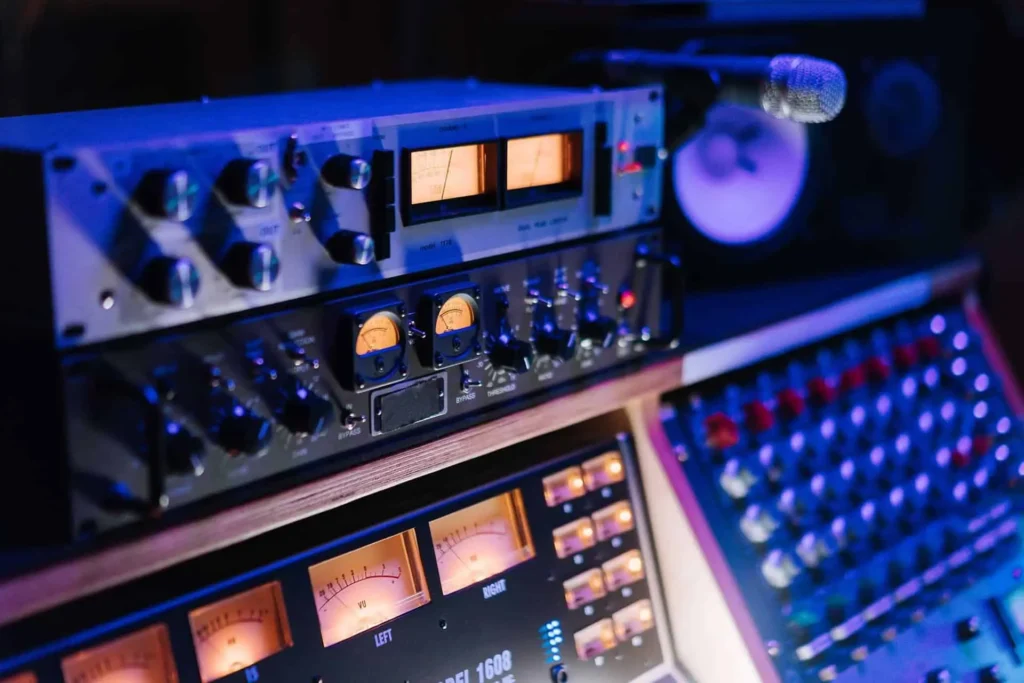

Some brands can be recognized instantly, even with your eyes closed.
Think about Netflix’s famous “ta-dum,” Intel’s iconic five-note signature, or the sound that accompanies many McDonald’s campaigns. These audio cues have become as recognizable as the brands’ visual logos themselves.
In a world saturated with visual content, brands are competing harder than ever for attention. Consumers scroll through thousands of images, advertisements, and messages every day. Yet while visual attention is fragmented, sound remains one of the most powerful ways to create an emotional connection and build lasting memories.
This is where a strong sonic identity becomes a strategic advantage. More than a marketing asset, it is a key component of an effective audio branding strategy that helps brands build recognition across every channel. A well-crafted sonic identity helps brands stand out, improve recall, and create consistency across every touchpoint. More importantly, it ensures that your brand doesn’t just look distinctive, it sounds distinctive too.
In this guide, you’ll learn how to create a sonic identity that truly sounds like your brand. From defining your brand personality to building a complete audio branding system, we’ll walk through the essential steps required to develop a memorable and effective sonic branding strategy.

What is a sonic identity?
A sonic identity is the auditory expression of a brand.
Just as visual identity relies on logos, colors, typography, and graphic guidelines, sonic identity relies on sound to communicate a brand’s personality, values, and positioning.
A common mistake is to think of sonic identity as a simple advertising jingle. In reality, it is a complete system of audio assets designed to create a coherent brand experience wherever consumers encounter the brand.
Whether through a television campaign, a mobile application, a podcast, a voice assistant, a retail environment, or customer service interactions, the same sonic DNA should be recognizable.
A strong sonic identity allows brands to create emotional consistency across every channel and strengthens recognition over time.
The Core Components
A complete sonic identity generally includes several interconnected elements:
Sonic logo
Also known as an audio logo, the sonic logo is the brand’s signature sound. Usually lasting between one and three seconds, it serves as the auditory equivalent of a visual logo.
Brand theme or melody
A longer musical composition that can be adapted across campaigns, videos, events, and branded content.
Brand voice
The voice style associated with the brand, including tone, rhythm, pace, and emotional delivery.
Sound palette
A curated set of instruments, textures, sound effects, and musical elements that define the brand’s sonic universe.
UI and product sounds (Earcons)
Small sounds embedded within digital interfaces, apps, connected devices, and software experiences.
Together, these assets form a coherent audio branding system that helps audiences immediately recognize and identify the brand.
Sonic Identity vs. a One-Off Jingle
A sonic identity is often confused with a jingle, but the two serve very different purposes.
A jingle is typically created for a specific campaign. It may become memorable, but its impact is usually limited to a short-term communication objective.
A sonic identity is a long-term strategic asset. It is designed to endure over time and evolve across different channels and brand experiences.
In other words, a jingle supports a campaign.
A sonic identity supports a brand.
The most successful brands invest in a scalable sonic branding system rather than relying on isolated pieces of music.

Why a sonic identity makes your brand memorable
Sound has a unique ability to trigger emotional and cognitive responses.
Unlike visuals, which require active attention, audio can influence perception almost instantly. The human brain is wired to process sound quickly, creating associations that become stronger through repetition.
This explains why sonic branding is so effective in building memory structures. When consumers repeatedly hear the same sonic cues, they gradually connect them with specific emotions, values, and experiences.
A sonic identity enhances brand recognition by creating an emotional shortcut between sound and brand perception. Brands that invest in custom audio branding create stronger emotional connections and improve consistency across touchpoints. Unlike generic music, a bespoke sonic identity is designed to reflect a brand’s unique personality and positioning.
A sonic identity also enhances multisensory branding. When visual and audio elements work together, consumers are more likely to remember a brand and develop stronger emotional connections with it.
The importance of sound is becoming even more evident as new communication channels emerge.
Today, consumers interact with brands through:
- Podcasts
- Voice assistants
- Smart speakers
- Mobile applications
- Connected devices
- Social media videos
- Streaming platforms
- Customer support systems
Many of these environments are audio-first or screenless.
A strong audio branding strategy ensures that your brand remains recognizable even when the logo is not visible.
Most importantly, sonic branding helps brands communicate who they are.
A luxury brand should sound refined and sophisticated.
A wellness brand should sound reassuring and calm.
A technology company should sound innovative and forward-thinking.
The objective is not only to be remembered, but to be remembered in a way that reflects your brand personality.

How to create a sonic identity: step by step
Creating an effective sonic identity requires both creativity and strategic thinking.
The strongest audio branding systems are built on a clear methodology that connects sound directly to brand values.
Step 1: Audit Your Brand Personality
Before composing a single note, start by understanding your brand.
Ask yourself:
- What does our brand stand for?
- What emotions do we want customers to feel?
- What differentiates us from competitors?
- How would our customers describe us?
Many agencies use brand personality frameworks based on opposite traits:
- Modern vs. traditional
- Energetic vs. calm
- Premium vs. accessible
- Human vs. technological
- Playful vs. serious
This exercise helps transform abstract positioning into strategic guidelines for audio branding.
For example, a luxury hospitality brand may seek to express elegance, warmth, and exclusivity.
A fintech company may prioritize trust, innovation, and simplicity.
A sports brand may focus on energy, motivation, and performance.
Without this strategic foundation, sound choices risk becoming subjective and inconsistent.
Step 2: Translate Attributes into Sound
Once brand attributes have been clearly defined, they must be translated into sonic characteristics.
This is where branding strategy meets sound design.
Each attribute can be represented through specific musical choices.
Tempo
Fast tempos often communicate innovation, excitement, and energy.
Slower tempos tend to convey reliability, serenity, and sophistication.
Instrumentation
Acoustic instruments generally feel more human and authentic.
Electronic sounds often communicate technology and modernity.
Timbre
Bright tones can evoke optimism and confidence.
Warm sounds may reinforce feelings of comfort and closeness.
Harmony
Simple harmonies can feel accessible and reassuring.
More complex harmonies may suggest creativity, expertise, or sophistication.
Voice characteristics
Voice choice plays a critical role in sonic branding. Tone, pace, accent, and delivery style should all reinforce the intended brand personality.
Every sound decision should support a consistent emotional message and reinforce the brand’s positioning.
Step 3: Design Your Sonic Logo
The sonic logo is often the most recognizable element of a sonic identity.
Its purpose is simple: create instant recognition.
The best sonic logos are:
- Short
- Distinctive
- Memorable
- Emotionally meaningful
- Flexible across channels
Most effective sonic logos last between one and three seconds.
This brief duration forces brands to focus on simplicity.
Like a visual logo, the audio logo should be unique enough to stand apart from competitors while remaining easy to remember.
A strong audio logo can be used across:
- Advertising
- Video content
- Podcasts
- Mobile applications
- Voice assistants
- Events
- Customer support experiences
The goal is to create a signature sound that becomes inseparable from the brand itself.
Step 4: Build the Full Sound Palette
A sonic logo alone is not enough to create a complete sonic identity.
Brands also need a broader sound branding ecosystem that ensures consistency across every customer touchpoint.
This includes:
A brand theme
A longer musical composition that expands on the sonic logo and can be adapted across campaigns.
Musical variations
Different arrangements and versions suited to specific audiences, markets, and contexts.
Earcons and interface sounds
Functional sounds used in digital products and customer journeys.
Ambient sound design
Background audio used in retail spaces, events, experiential marketing, podcasts, or video content.
At this stage, it is essential to think beyond traditional advertising.
How will the brand sound in a mobile app?
How will it sound through a voice assistant?
How will it sound during an event or podcast?
The objective is to develop a complete sound branding system that remains recognizable whether customers encounter the brand through advertising, digital products, podcasts, retail environments, or voice interfaces.
Considering these touchpoints from the beginning allows brands to build a scalable sonic branding system rather than a collection of disconnected assets.
Step 5: Test, Then Document It in a Sonic Guide
Before officially launching a sonic identity, it is important to test it.
Brands should evaluate:
- Recognition
- Memorability
- Emotional impact
- Brand consistency
- Differentiation
Testing can be conducted through customer interviews, focus groups, surveys, or audio recognition exercises.
The objective is simple: determine whether listeners associate the sounds with the intended brand attributes.
Once validated, the entire sonic identity should be documented within a sonic brand guide.
This sonic guide typically includes:
- Sonic logo specifications
- Approved musical themes
- Sound palette guidelines
- Voice recommendations
- Usage examples
- Technical specifications
- Adaptation rules across channels
Companies that offer professional sonic branding services typically formalize these rules to ensure consistency across teams, agencies, and international markets.
The sonic guide becomes the reference framework that protects brand consistency over time and ensures that every future audio asset contributes to a coherent brand experience.
Sonic identity examples that work
Some sonic identities have become so embedded in everyday life that consumers recognize them instantly, often before seeing the brand’s logo.
What makes these examples particularly interesting is not just their popularity. Each one demonstrates a different principle of effective sonic branding. By analyzing why they work, brands can better understand how to create a sonic identity that is memorable, distinctive, and aligned with their positioning.
Netflix: Building Anticipation in Two Seconds
Netflix’s famous “ta-dum” is often cited as one of the most successful examples of modern sonic branding.
Introduced in 2015, the sound was designed to create anticipation at the beginning of every Netflix Original production. The company needed an audio signature that felt cinematic, distinctive, and immediately recognizable across all devices. The result was a short sonic logo that communicates excitement and signals the start of an entertainment experience.
What makes it effective is its simplicity. The sound lasts only a couple of seconds, yet it creates an emotional trigger that millions of viewers now associate with premium content and entertainment. Netflix has also expanded the concept beyond the logo itself by integrating sound design throughout its platform experience.
Key takeaway: A strong sonic logo does not need to be complex. Sometimes a simple and consistent audio cue is enough to create powerful brand recognition.
Intel: Turning an Invisible Product into a Global Brand
Intel’s five-note “Intel Inside” sound is widely considered one of the most recognizable sonic logos ever created.
When Intel launched its “Intel Inside” campaign, the company faced a unique challenge. Consumers purchased computers from brands like Dell, HP, or IBM, not Intel directly. The processor lived inside the computer and remained invisible to the end user.
To solve this problem, Intel developed a distinctive sonic identity that accompanied its advertising worldwide. Composed by Walter Werzowa in 1994, the famous five-note sequence was designed to express reliability, innovation, and trust. Its rhythm was inspired by the words “Intel Inside.”
Over time, the sound became more famous than many visual branding assets. Repeated across thousands of advertisements, it helped transform a hidden technology supplier into a household name.
Key takeaway: Sonic branding can dramatically increase visibility, especially for brands whose products are not naturally front-and-center in the customer experience.
Mastercard: Thinking Beyond the Sonic Logo
Mastercard offers an excellent example of what happens when a brand develops a complete sonic identity rather than a standalone sound.
In 2019, Mastercard launched a comprehensive sonic branding system built around a six-note melody. The objective was not simply to create a sonic logo, but to design an entire sound architecture that could be used across advertising, payment confirmations, customer experiences, voice environments, retail interactions, and digital channels.
One particularly innovative aspect of Mastercard’s strategy is the use of audio at the moment of payment approval. The sound acts as a reassurance signal, helping customers feel confident that their transaction has been successfully completed. According to Mastercard’s own research, this sonic confirmation can strengthen perceptions of trust and security during the checkout process.
Rather than relying on a single audio asset, Mastercard created a flexible sonic ecosystem capable of adapting to different cultures, formats, and touchpoints while remaining recognizable worldwide.
Key takeaway: The most successful sonic identities extend far beyond advertising and become part of the customer experience itself.
What These Brands Have in Common
Netflix, Intel, and Mastercard operate in very different industries. Yet their sonic identities share several important characteristics.
They are:
- Simple enough to be remembered
- Consistent across channels
- Distinctive from competitors
- Emotionally connected to the brand experience
- Designed for long-term use rather than a single campaign
Most importantly, each of these brands created sounds that genuinely reflect who they are.
Netflix sounds cinematic.
Intel sounds technological and reliable.
Mastercard sounds reassuring and seamless.
That is ultimately the goal of any successful sonic identity: not simply to make noise, but to create a recognizable audio experience that reinforces the brand’s personality every time it is heard.

Common mistakes to avoid
Even well-intentioned sonic branding projects can fail when a few fundamental principles are overlooked.
Avoid these common mistakes:
- Using generic stock music that does not reflect your brand identity.
- Copying competitors instead of building a distinctive sonic identity.
- Creating a sonic logo that is too long or too complex.
- Failing to maintain audio consistency across channels.
- Ignoring voice assistants, apps, and mobile experiences.
- Treating sound as an afterthought instead of a strategic brand asset.
- Neglecting to document the identity in a sonic guide.
- Changing sonic assets too frequently and confusing audiences.
- Prioritizing personal musical tastes over strategic brand objectives.
- Developing audio content without considering future scalability.
A successful sonic identity requires long-term consistency and strategic thinking.
Conclusion
A successful sonic identity is much more than a pleasant piece of music.
It is a strategic branding asset that allows brands to become instantly recognizable, emotionally engaging, and consistent across every touchpoint.
As consumers interact with brands through increasingly diverse and audio-driven channels, audio branding, sound branding, and sonic branding are becoming essential tools for differentiation and memorability.
The brands that stand out tomorrow will not only have strong visual identities. They will also have distinctive sonic identities, memorable sonic logos, and carefully designed audio experiences.
If you’re wondering how to create a sonic brand, the process begins with understanding your brand personality and translating it into a coherent sonic ecosystem.
Whether through a signature melody, an audio logo, a brand voice, or a complete custom audio branding strategy, the goal remains the same: create a sonic identity that sounds authentically and unmistakably like your brand.
The strongest brands are not only seen. They are heard, recognized, and remembered.
Your brand already has a personality. A strong sonic identity helps people hear it. Explore how strategic audio branding can turn every sound into a memorable brand experience. Let’s talk!